Choosing a civil site development contractor in Tampa Bay starts with finding a team that can coordinate excavation, grading, underground utilities, drainage, and roadway construction for your project. Before walls or roofs take shape, the ground must be prepared and the essential infrastructure installed according to the approved plans.
For developers, general contractors, engineers, and property owners, choosing the right site work contractor means looking beyond the initial price. This guide explains what to ask before starting a project in Pasco, Hernando, Hillsborough, or Pinellas County.
What to Look for in a Civil Site Development Contractor in Tampa Bay
A site contractor gets the land ready. That usually means:
- Land clearing and site preparation within the agreed project scope
- Excavation and grading so water moves the right way
- Installing water lines, sanitary sewer systems, and storm drainage infrastructure
- Building roads, paving, curbs, and sidewalks
Every job after this one depends on how well this work is done. A bad base can mean cracked pavement, flooded parking lots, and expensive repairs a few years later.
Explore CSB Civil’s construction services to review earthwork, utility, and site-development capabilities. When comparing an earthwork contractor or underground utility contractor in Tampa Bay, confirm which activities are directly performed and which require coordination with other trades.
Why Florida Ground Is Different
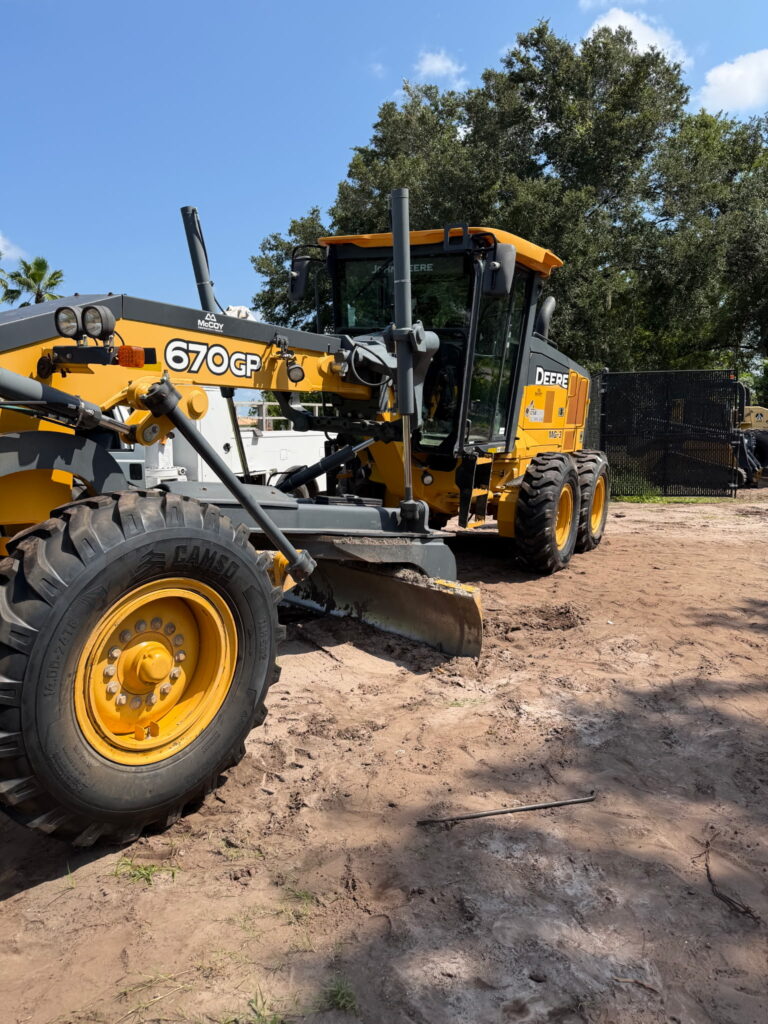
Florida site conditions vary from parcel to parcel. A contractor should review the project plans, available geotechnical information, drainage design, and access conditions before deciding how to approach the work.
Soil conditions. Sandy soils and unsuitable material can affect excavation, fill placement, and compaction. The construction approach should follow the project specifications and applicable testing requirements.
Groundwater. Some sites may require dewatering during underground utility installation. Ask how groundwater conditions will be evaluated and whether any dewatering work is included in the bid.
Heavy summer rain. A single storm can wash out a fresh grade. Good contractors plan for erosion and stormwater before the rain comes, not after.
A useful early conversation covers these risks and identifies which conditions are known, which require further investigation, and how unexpected findings will be handled.
Existing underground facilities must also be addressed before digging. Sunshine 811 provides Florida utility-location and safe-digging information. Discuss utility locating, field verification, and excavation responsibilities with the project team before construction begins.
Every County Has Its Own Rules
Tampa Bay is not one market. It is several, and each has its own permit process, timeline, and inspectors.
- Pasco County projects around Port Richey, New Port Richey, and Hudson may need coordinated land clearing, excavation, grading, drainage, and utility installation.
- Hernando County projects in Brooksville, Spring Hill, and surrounding communities may require site preparation, earthwork, underground utilities, and roadway improvements.
- Hillsborough County projects in Tampa and nearby communities may involve commercial excavation services, storm sewer installation, water and sewer work, and paving.
- Pinellas County projects in Clearwater, St. Petersburg, and surrounding areas may involve redevelopment, existing utilities, limited access, and careful construction sequencing.
Requirements depend on the project location and scope, including whether county, municipal, utility-provider, or other approvals apply. Ask how the contractor will coordinate required inspections and identify responsibilities before mobilization.
Five Questions to Ask Before You Hire
You do not need to be an expert. Just ask these.
1. Are you licensed for this scope? Ask for the appropriate Florida license information and verify it through the Florida Department of Business and Professional Regulation. Confirm that licensing and insurance match the work being proposed.
Verify licensing through Florida DBPR rather than relying only on a number printed in a proposal.
2. Have you completed similar work? Ask about projects with comparable earthwork quantities, utility systems, drainage needs, and access constraints. Relevant examples are more useful than a broad claim about years in business.
3. Who will actually be on my job? Some companies sell you the job, then hand it to someone else. Ask who the project lead is and how often you will hear from them.
4. How do you handle changes? Ask how unexpected conditions will be documented, priced, and submitted for approval. Agree on the change-order process before work starts so responsibilities are clear.
5. Can you coordinate multiple phases? When a contractor handles excavation, underground utilities, and site improvements, ask how those activities will be sequenced. Clear scope boundaries and handoffs remain important even when one company provides several services.
How to Compare Bids Without Getting Fooled
The lowest price is not always the best price. When you get quotes, look at these things side by side:
- Scope. Does each bid cover the same work, quantities, testing responsibilities, and restoration? A lower total may reflect a different scope rather than a better price.
- Schedule. A fast start date means little if the crew is spread across five other jobs.
- Unknowns. Ask what is not included, like rock, bad soil, or dewatering. These are common extras in Florida.
- Communication. Ask who will provide updates, how often they will arrive, and how urgent issues will be escalated.
If two bids are far apart, ask both contractors to explain their assumptions and exclusions. Comparing the same scope helps you make a more informed decision.
Common Mistakes Owners Make
Hiring too late. Bring a site contractor in during planning, not after the drawings are done. They can point out drainage or utility problems while they are still cheap to fix.
Ignoring the schedule of utilities. Water and sewer connections often depend on outside approvals. Start those early.
Skipping the site walk. Walk the land with your contractor. Ten minutes on site can reveal things a drawing never will.
Why Local Experience Helps
Local experience is most useful when it is demonstrated through relevant projects and a clear understanding of site conditions. Ask an excavation contractor in Tampa Bay how it will coordinate grading, drainage, utility crossings, construction access, and the transition to roadway work.
CSB Civil operates from Port Richey and serves the surrounding Tampa Bay region, including Pasco, Hernando, Hillsborough, and Pinellas counties. Its services include earthwork and excavation, underground utilities, and site work and development for commercial and residential projects. Developers and general contractors can discuss either a defined civil construction subcontract or a broader site-development scope.
Learn more about CSB Civil and discuss how its service capabilities fit your project requirements.
Discuss Your Tampa Bay Site Development Project
Well-coordinated site work supports the roads, drainage systems, utilities, and structures that follow. Choosing a contractor is an opportunity to clarify the scope, identify site risks, and establish a practical communication plan before equipment arrives.
Bring the site address, available plans, anticipated schedule, and bid requirements to the first discussion. Ask which services are included and what information the contractor needs to prepare a meaningful proposal.
Ready to break ground? Contact CSB Civil to discuss your excavation, underground utility, grading, roadway, or complete site-development project in Pasco, Hernando, Hillsborough, or Pinellas County.
Contact CSB Civil about your project or call 727-999-1048.